
Iron is often discussed as something to take when you feel tired. In everyday life, it is more useful to separate two questions: how can your meals provide iron, and is there a medical reason to check your iron levels? A shopping list can help with the first. It cannot answer the second.
You do not need to build every meal around a nutrient calculation. Start with foods you enjoy, notice where iron already appears, and make a few practical pairings. If symptoms or a diagnosis are driving your interest, bring those questions to a healthcare professional as well.
Know what iron does, without turning it into an energy promise
The NIH Office of Dietary Supplements' 2023 iron fact sheet explains that the body uses iron to make hemoglobin, the protein in red blood cells that carries oxygen. Iron needs differ across ages and life stages, including pregnancy, and also depend on dietary pattern.
That does not mean an iron supplement is a general answer to a difficult afternoon. Feeling tired does not identify its cause, and eating an iron-containing lunch is not a test of whether you were deficient.
If you are trying to understand a laboratory result, ask what was measured and what the result means in your circumstances. A result, your symptoms and your medical history belong in the same conversation. Avoid comparing a single number with a friend's result or treating a social media checklist as a diagnosis.
Find a few sources you already like
Iron comes from a range of foods. MedlinePlus's iron-in-diet guide, updated in 2025, lists sources including beans, iron-fortified cereals, lean meat, seafood and poultry. Plant and animal foods can both contribute, although the body absorbs their iron differently.
Look through a few meals you actually eat. A bean-based lunch, a fortified breakfast cereal or a dinner containing meat may already be part of the picture. The useful next step is to make those options easy to repeat.
Pick two meals to work on rather than rewriting the entire week. For example, if you regularly eat toast at lunch, you could plan a white-bean topping with herbs and vegetables. If you enjoy a meat or poultry dish, put its ingredients on the next shopping list rather than buying unfamiliar foods simply because they appear on an iron ranking.
Portion size and the particular food matter. “Contains iron” does not mean every serving supplies the same amount. When comparing packaged foods, look at the stated serving and iron information together. Choose a product you will realistically eat, with taste, budget and other dietary needs in mind.
Pair plant sources with vitamin C
Plant foods provide nonheme iron. The NIH Office of Dietary Supplements' vitamin C fact sheet, checked in October 2026, explains that vitamin C improves absorption of this form of iron.
This can be an ordinary food pairing. Try lentils with chopped sweet pepper, beans with tomato, or an iron-fortified cereal with strawberries. The NIH iron guide identifies these fruits and vegetables among vitamin C sources that can help with plant iron absorption.
Think of the pairing as a way to assemble lunch, not a precise formula you must get right at every sitting. A bowl can contain foods you like for several reasons: texture, flavor, convenience and nutrition.
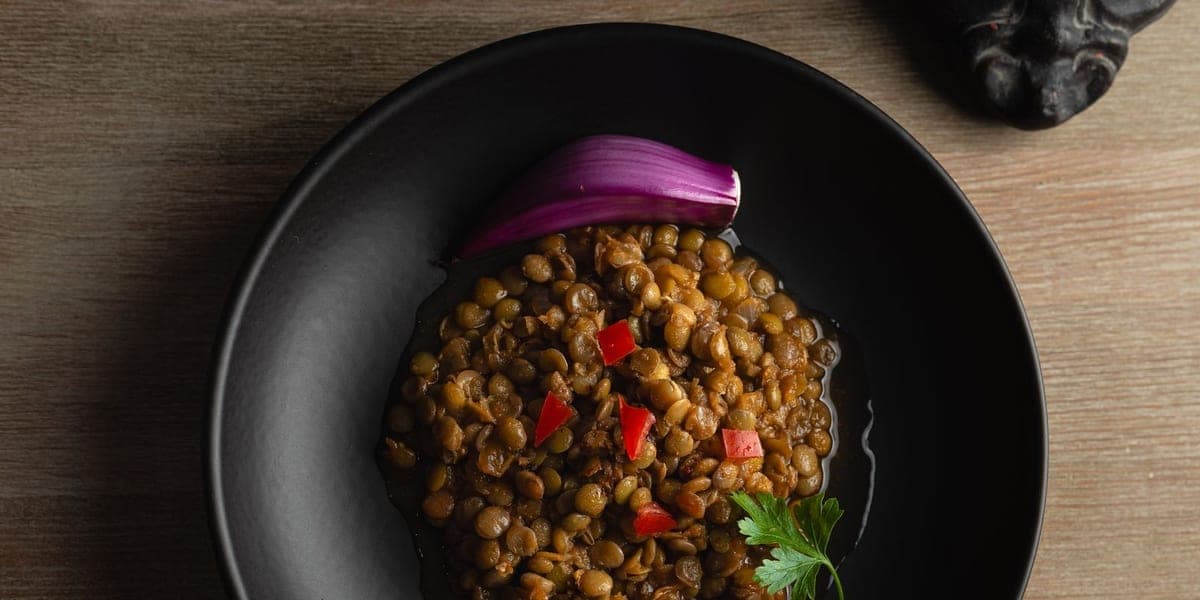
One practical example is a lentil bowl built from cooked lentils, chopped vegetables, herbs and a dressing you enjoy. Serve it with the rest of the meal you would normally choose. Another is a bean-filled wrap with fresh tomato and pepper. These are meal ideas, not treatments for low iron.
If beans and lentils are new to your kitchen, our guide to using pulses in everyday meals can help with the practical side.
Make the choice fit the way you shop
An ambitious recipe is less useful if its ingredients stay untouched. Choose a form of the food that fits your time and cooking confidence. Keep one option available for the days when the planned meal does not happen.
Write the pairing directly on your shopping list. “Lentils and peppers for lunch” is easier to act on than a general reminder to eat more iron. If you shop for several people, choose a meal that can be assembled with different toppings rather than requiring everyone to eat the same version.
Use your next week as a small planning exercise. Which ingredients were easy to find? Which meal did you enjoy enough to repeat? What needed too much preparation? Those answers help you build a useful routine without making food into a daily accounting task.
If your diet excludes several food groups, a registered dietitian can help you assess the whole pattern. Bring examples of ordinary days, including the foods you rely on when you are busy.
Food intake is only part of the medical picture
The National Heart, Lung, and Blood Institute's 2022 guide to iron-deficiency anemia explains that blood loss and problems absorbing iron can contribute. Assessment may include blood tests such as a complete blood count and ferritin, interpreted by a clinician.
This is why persistent symptoms need more than a food experiment. If you have ongoing unexplained tiredness, breathlessness or concerns about heavy menstrual bleeding, arrange medical advice. New chest pain, severe breathing difficulty or fainting needs urgent assessment.
Tell the clinician about symptoms, dietary changes, blood donation, medicines and any supplements. You do not need to decide which detail is responsible before mentioning it.
If iron deficiency has already been diagnosed, food choices may support the plan, but they do not replace prescribed treatment or investigation of the cause. Ask when follow-up is needed and what to do if treatment causes problems.
Keep supplements a separate decision
The NIH iron fact sheet warns that excess supplemental iron can be harmful and that iron can interact with medicines. Keep iron-containing products out of children's reach.
Before starting an iron supplement or changing a dose, check with your clinician, especially during pregnancy, while taking medication or with an existing condition. If you already take a multivitamin, bring its label so the total plan is clear.
For everyday eating, begin with one familiar iron-containing meal and a fruit or vegetable pairing you enjoy. For symptoms, begin with a clinical conversation. Keeping those two steps clear makes both more useful.
Photo: Pexels. Image is illustrative.