
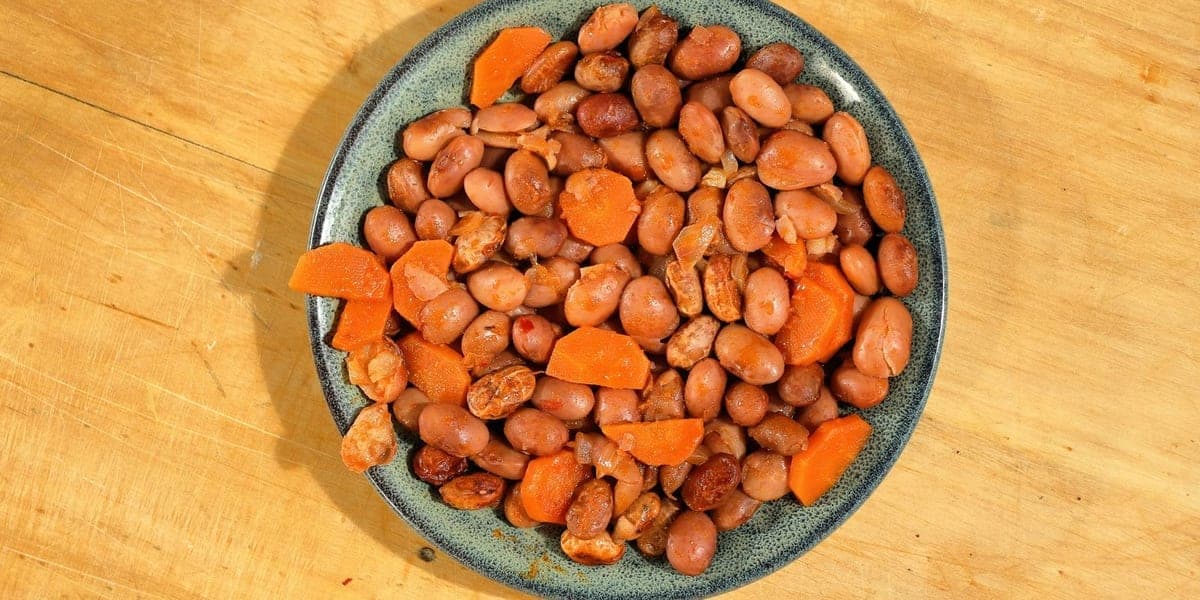
A can of beans can sit in the cupboard for weeks while you wait for the right recipe. The easier approach is to give it a job in a meal you already make. A spoonful of white beans can join tomato soup; chickpeas can become part of a lunch bowl; lentils can share a pan with the ingredients for a familiar sauce.
Beans, peas and lentils belong in ordinary food rather than a separate category of ambitious healthy cooking. The useful question is which type, texture and preparation will work in your kitchen.
What pulses bring to a meal
The NHS guide to a balanced diet, checked in September 2026, describes pulses as sources of fiber, protein, vitamins and minerals. They can be part of a varied eating pattern alongside vegetables, starchy foods and other foods you enjoy.
That does not make every bean product nutritionally identical. Plain chickpeas, beans in a sweet sauce and a prepared bean salad can have different ingredients. Think about the whole dish instead of expecting one ingredient to do every nutritional job.
You also do not have to become vegetarian to use them. In its Eating Well for Less advice, checked in September 2026, University College London Hospitals suggests replacing some meat in familiar dishes with cooked lentils. Sharing the recipe between ingredients can be an approachable experiment.
Start with the texture you want
Choose the destination before choosing the bean. If you want a creamy spread, try a cooked white bean mashed with ingredients you already like. For something with a more distinct bite, chickpeas might fit a chopped salad. Cooked lentils can be convenient when you want smaller pieces distributed through a sauce.
These are cooking ideas, not rules. Different brands and varieties vary in firmness, and personal preference matters. Try a small amount before committing an entire dish to an unfamiliar texture.
If you disliked one bean meal years ago, identify what bothered you. Was it a floury center, a sweet sauce, the seasoning or the size of the beans? That answer gives you a more useful next experiment than deciding that every pulse will taste the same.
For a shared household meal, serve a new component separately at first. People can choose their own amount without the cook making several complete dinners.
Let convenience count
For a first attempt, a can or pouch labeled as cooked keeps the preparation simple. Check the instructions rather than assuming every packet on the same shelf is ready to eat. A bag of dry beans needs a different process.
Compare similar products using the same serving basis. Look at the salt or sodium line and the ingredient list, particularly for beans sold in sauce. If the recipe calls for drained beans, check the drained weight when judging how much the pack supplies.
You do not need to buy several varieties at once. Choose one product with a clear use, then decide whether it deserves a regular place on your shopping list. An inexpensive ingredient is only useful if you enjoy it enough to use it.
Keep a note of the brand or style you liked. “The small white beans in water” is often more helpful on the next shopping trip than a vague intention to buy something healthier.
Three starting points for familiar meals
For a warm lunch, add cooked beans to a tomato-based soup and heat according to the ingredients' instructions. Taste before adding more seasoning. Serve with bread or another accompaniment that makes the meal satisfying to you.
For a cold lunch, combine ready-to-eat chickpeas with chopped vegetables and a dressing you enjoy. Consider the balance of textures: something crisp, something soft and something that brings acidity or freshness. The aim is a meal you want to repeat.
For dinner, stir cooked lentils into a familiar sauce rather than redesigning the whole recipe. Start with an amount that leaves the texture recognizable. You can decide next time whether you prefer more lentils, a different variety or another dish entirely.
These examples are flexible meal ideas, not nutritionally complete prescriptions. Adapt them to allergies, dietary needs and the other foods you eat.
Give digestive changes some room
A sudden increase in fiber can be uncomfortable for some people. The National Institute of Diabetes and Digestive and Kidney Diseases, checked in September 2026, recommends increasing fiber a little at a time so the body can adjust.
Try a modest addition to one meal instead of changing breakfast, lunch and dinner together. This also makes it easier to notice whether you like the food and how it fits your routine.
Persistent or significant digestive symptoms deserve individual advice. If you follow a prescribed diet, have a digestive condition or need to manage particular nutrients, ask your clinician or registered dietitian how pulses fit. Do not force larger portions to meet an internet challenge.
Treat dried beans as a separate cooking task
The US Food and Drug Administration's natural toxins guidance, checked in September 2026, explains that raw or undercooked beans can contain harmful levels of a lectin called phytohaemagglutinin. Canned and properly cooked kidney beans do not pose the same problem.
Follow reliable instructions for the particular dried bean, including any required soaking and boiling. Do not assume a slow cooker alone makes raw kidney beans safe. The FDA's Bad Bug Book, second edition, describes illness associated with insufficient cooking.
Using cooked canned beans is a reasonable choice when you do not want that preparation step. There is no prize for making a weekday meal more complicated.
Plan the next use before opening the pack
Read the storage instructions and decide what will happen to any remainder. Put a note on your meal plan if the rest is intended for tomorrow's lunch. Follow the product's refrigeration and use-by advice after opening.
After the meal, ask one practical question: would you make it again? If yes, keep the combination. If not, change one feature, such as texture or seasoning, before buying a cupboard full of alternatives.
A useful bean habit can begin with one ordinary meal that tastes good and is easy to make again.
Photo: Mustafa Akın / Pexels.