
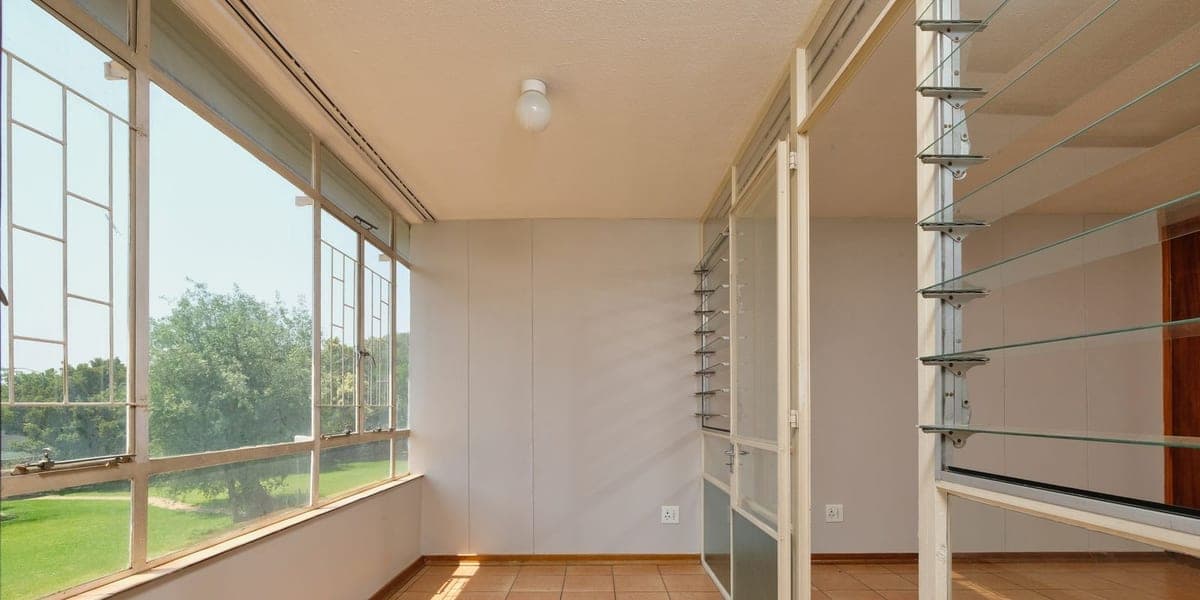
A room can look tidy without telling you much about its air. Equally, buying an air cleaner does not answer every question about cooking fumes, a recurring leak or a fan that no longer works. A useful starting point is to look at what happens in each room and which problem you are trying to address.
You do not need to turn the house into a monitoring project. Begin with one observation you can act on: a ventilation question, a maintenance task or a source of pollution you can reduce. Then decide whether equipment would help with the remaining issue.
Look for the source before shopping
The Environmental Protection Agency's indoor air quality guidance, updated in 2026, describes source control, ventilation and filtration as complementary approaches. Removing or reducing a pollution source is often the most effective starting point.
Make a simple room list. In the kitchen, your question might concern the cooker hood. In the bathroom, it might be a fan that never seems to run. In a spare room, it might be water staining around a window. Record the observation without trying to diagnose the air from it.
A useful note sounds like, “The extractor has stopped turning on.” A less useful note is, “This room is toxic.” The first points toward a repair conversation; the second makes a conclusion you cannot establish from the observation alone.
If you rent, photographs and dates can help you describe maintenance problems to the property manager. Keep requests specific enough for someone to inspect the actual issue.
Find out where ventilation goes
EPA guidance explains that exhaust fans vented outdoors can remove pollutants near their source. Many home heating and cooling systems mainly recirculate indoor air, so a running system does not necessarily mean outdoor air is coming in.
Check manuals or ask the building manager how your setup works. Do not dismantle a fan or make assumptions from its noise. You may find that a cooker hood recirculates air through a filter, while another model exhausts outdoors.
Opening windows can increase ventilation when outdoor conditions allow, but weather, outdoor pollution and safety matter. A smoky day is different from a clear one. Use current local information and relevant public health advice when deciding what to open.
For a practical first step, identify the controls you already have. Label an unfamiliar switch if appropriate, locate the instructions and find out who handles maintenance. Understanding the existing system can be more useful than adding another appliance immediately.
Give dampness a repair plan
EPA's guide to mold and moisture, checked in October 2026, emphasizes fixing the water problem as well as addressing mold. Cleaning a patch without resolving the source of moisture can leave the problem returning.
Treat a repeated stain, leak or damp area as something to investigate. Record where it appears and what was happening, such as rainfall or a plumbing leak. You do not need to identify a mold species before reporting water damage.
The EPA guide recommends professional help for situations such as sewage-contaminated water and provides criteria for larger or complicated cleanup jobs. If you have health concerns, ask a healthcare professional before attempting mold cleanup.
A dehumidifier or air cleaner does not repair a leaking pipe. Ask who will address the cause, when the work will happen and how the area will be checked afterward. This is especially useful when several people share responsibility for a property.
Decide what you want a filter to do
The EPA's home air cleaner overview, updated in 2026, distinguishes portable devices intended for a room or area from filters used in central systems. Filtration can supplement other measures, but it does not remove every indoor pollutant.
Write down the space you want to serve and the concern you want to address before comparing products. “A unit for this bedroom” is a more manageable purchase brief than “something that makes the whole house healthy.”
Also write down practical constraints. Where could the device stand? Is there an appropriate outlet? Can you afford replacement filters? Would its sound be acceptable during the hours you intend to run it?
Those questions do not establish performance, but they can rule out equipment that would be difficult to use. A product description needs to fit the real room and the real household budget.
Read performance information, not just promises
EPA's Guide to Air Cleaners in the Home, checked in October 2026, recommends choosing a particle-filtering portable cleaner with a clean air delivery rate, or CADR, suited to the room. It warns against devices that intentionally produce ozone, a lung irritant.
Look for instructions about placement, fan settings and filter replacement. Room-size claims and performance information need context; a device running at a quieter setting may move less air than at its highest setting.
For a central system, check which filters the equipment can accommodate rather than buying the most restrictive option by guesswork. Ask a qualified technician if the manual does not make compatibility clear.
Keep a record of the model and filter type somewhere easy to find. When maintenance is due, you should not have to reconstruct the purchasing decision from an old online listing.
Turn observations into a short action list
Choose a small number of tasks you can actually complete. For example: ask where the kitchen hood exhausts, report the bathroom leak and locate the central system's filter instructions.
Give each task an owner and a next step. “Improve air” is hard to finish. “Email the building manager about the fan today” is something you can do and follow up.
Avoid judging success only by scent or by whether the room feels fresher. The useful outcome may be a repaired leak, a functioning exhaust system or a filter maintained according to instructions. These are concrete changes you can verify.
If symptoms persist or you are concerned about a particular exposure, seek appropriate medical or environmental advice. A room checklist cannot determine what is causing a health problem.
Start with the part of the home that has the clearest unanswered question. Resolve that question, record the next maintenance step and move on when you have a reason to. Indoor air care works best as a set of specific household decisions, rather than an endless search for the perfect device.
Photo: Pexels.