
A supplement bottle can present several kinds of information at once: a nutrient amount, a serving suggestion, a quality seal and an ambitious promise on the front. Reading them as if they all answer the same question makes shopping harder.
A useful label check separates three decisions. What is in the product? What evidence supports the reason you want to take it? And is it appropriate for you? The label can help with the first question. The other two often need reliable information and a conversation with a clinician or pharmacist.
Begin with the reason, before the bottle
Write down what you hope the supplement will do. “A clinician recommended this for a documented need” is a different starting point from “An advertisement said I might be missing something.”
Make the question specific enough to discuss. If you are concerned about tiredness, for example, ask about the symptom rather than assuming the answer is whichever ingredient appears on an energy product. A marketing category is not a diagnosis.
Before starting a supplement or changing a dose, check with your clinician, especially if you are pregnant or breastfeeding, take medicines, have a health condition or are preparing for surgery. Do not replace prescribed treatment with a supplement on your own.
You can still gather label information before that conversation. Taking a clear photograph of the front, the Supplement Facts panel and the other ingredients is often more useful than trying to remember a brand name.
Find the serving size first
The FDA's questions and answers on dietary supplements, checked in September 2026, explains that the Supplement Facts panel identifies the serving size and amounts per serving. Other ingredients appear separately. Individual amounts within a proprietary blend may not be disclosed.
That means the number beside an ingredient may describe several capsules rather than one. Read the serving line before comparing two products.
As a hypothetical arithmetic example, a label might show 200 milligrams per serving and define a serving as two capsules. Another might show 200 milligrams for one capsule. Those packages do not describe the same amount per capsule. This example is about reading units, not recommending an ingredient or dose.
Keep the unit attached to the number. Milligrams and micrograms are not interchangeable, and a percentage is not the same kind of information as an amount by weight. If the comparison is unclear, let a pharmacist help rather than guessing.
Turn the bottle around
The front label is designed to be noticed. The rest of the package may be where you find the information needed for a sensible discussion: directions, warnings, ingredients, manufacturer details and how much product is actually in the container.
Read the complete product name too. A company can sell several versions with similar packaging. A gummy, a tablet and an “extra strength” version should not be assumed to share the same formulation.
For online shopping, look for a readable image of the actual label. If the listing gives only a slogan and an attractive front photograph, you do not yet have enough information to make a useful comparison. Ask the seller or manufacturer for the current label.
When an item arrives, compare it with the information you reviewed. Keep the packaging available for your care team. A photograph of an older formula may not represent the bottle now in your cupboard.
Understand what approval and testing mean
FDA guidance states that the agency does not approve dietary supplements before they are marketed and does not test every supplement before sale. Being sold in a familiar store is not the same as having demonstrated benefit for your situation.
The NIH Office of Dietary Supplements' consumer overview, checked in September 2026, explains that independent quality programs can assess matters such as contents and contamination. Their seals do not establish that a product will be safe or effective for you.
If a label displays a seal, identify the organization and what its program covers. Check the exact product in the organization's current listing when available. Do not treat the words “tested” or “quality” by themselves as a complete explanation.
These are separate questions: whether the bottle contains what it claims, whether the ingredient has evidence for a particular use, and whether taking it makes sense for you. A favorable answer to one does not automatically settle the others.
Bring the whole routine into the conversation
The NIH overview recommends keeping a record of medicines and supplements, including the amount and frequency used. It also notes that “natural” does not necessarily mean safe and that supplements can interact with medicines.
Include products you do not think of as tablets: powders, gummies, drinks or occasional herbal preparations. A clinician cannot assess a combination they do not know you are taking.
Describe actual use rather than copying only the label directions. If you take something a few times a week, say that. If you started a product and stopped because you felt unwell, include that history.
A concise set of questions can help:
- What problem are we trying to address?
- Is there evidence that this product or ingredient helps in my circumstances?
- Does it overlap with anything I already take?
- If it is appropriate, what amount and review plan should I follow?
The appointment should leave you with a reasoned plan, which may include deciding not to buy the product.
Make the decision easier to revisit
If a clinician recommends a supplement, ask when to review it and what information would change the plan. Add that date or follow-up task beside the product in your notes.
Keep the actual label, not just the advertisement that introduced it to you. Record any changes in the formulation or the way you use it so a later review has something concrete to work from.
A careful label check is not about becoming suspicious of every bottle. It is about knowing which information you have, which claims remain unproven, and who can help connect the product to your health needs. That is a stronger basis for a purchase than the most prominent promise on the shelf.
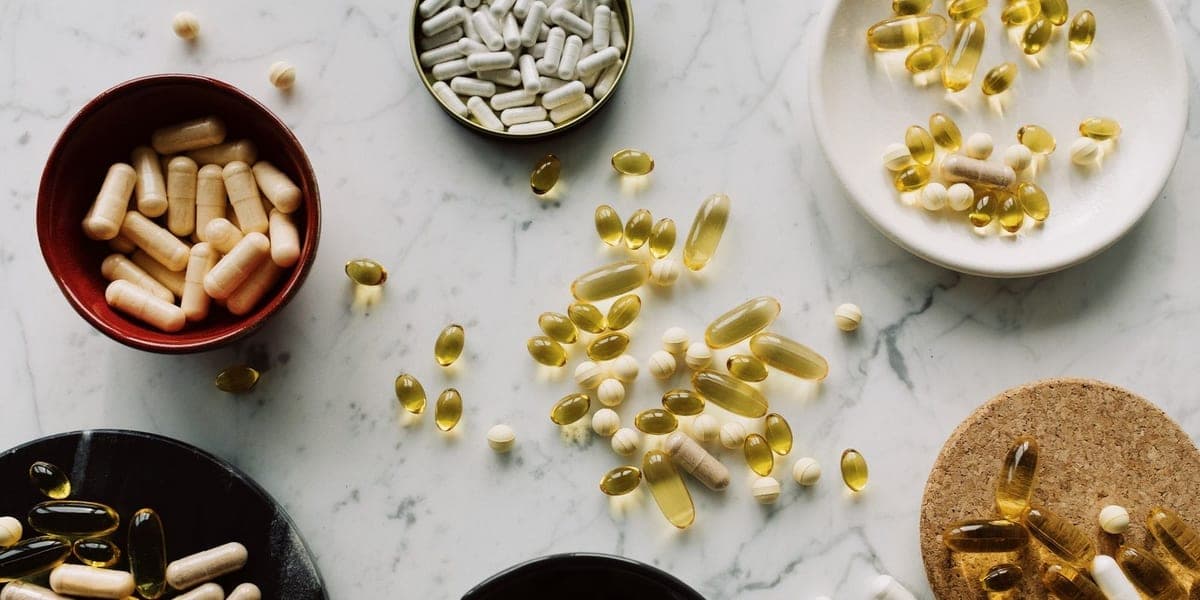
Photo: ready made on Pexels. Illustrative still life, not a supplement or storage recommendation.