
Fiber is easy to turn into a number and just as easy to overlook at lunch. A meal can be filling, convenient, and perfectly enjoyable while containing very little of it. Getting more fiber usually starts with recognizing the ordinary foods that provide it and finding places for them in meals you already eat.
You do not need to begin with a powder, a complicated tracking app, or an entirely new diet. Start by looking at one meal. Could breakfast include oats or fruit? Could dinner include beans or another vegetable? Those questions are more useful than trying to rebuild your entire menu overnight.
What fiber does
Dietary fiber is a component of plant foods that your digestive system does not fully break down. Different fibers behave differently. Some dissolve in water; others do not. Some are fermented by microbes in the gut. These distinctions help explain why two foods or supplements with similar fiber totals may not feel identical to your digestive system.
In its 2019 guide to dietary fiber, NIH News in Health explains the broad distinction between soluble and insoluble fiber and notes that many foods contain both. Oats, beans, peas, fruit, whole grains, and vegetables can contribute different kinds. Fiber can support bowel regularity, and certain types also have evidence relating to cholesterol.
For meal planning, there is little reason to sort every ingredient into a chemistry category. Eating a range of foods is a more workable task. It also makes meals more interesting than relying on one ingredient for every nutritional goal.
How much should you aim for?
The National Institute of Diabetes and Digestive and Kidney Diseases lists 22 to 34 grams a day for adults, depending on age and sex. This is population guidance, not a personalized prescription. Your needs and tolerances may differ, particularly if you have a digestive condition or have been given specific dietary instructions.
The same NIDDK guidance, reviewed in 2018 and accessed in 2026, recommends adding fiber gradually and drinking liquids to help it work. Avoid treating the upper end of a range as a target you must reach immediately. If you have a fluid restriction, follow your care team's advice rather than deliberately increasing fluids on your own.
A useful first step is to notice where you are starting. Read a few labels or jot down a typical day's meals. You are looking for opportunities, not grading yourself. Someone who rarely eats beans or whole grains has different starting options from someone already eating them regularly.
Put fiber into meals you recognize
Consider the meals you repeat because they are easy. Repetition can help here: adjusting a familiar meal means fewer new decisions every day.
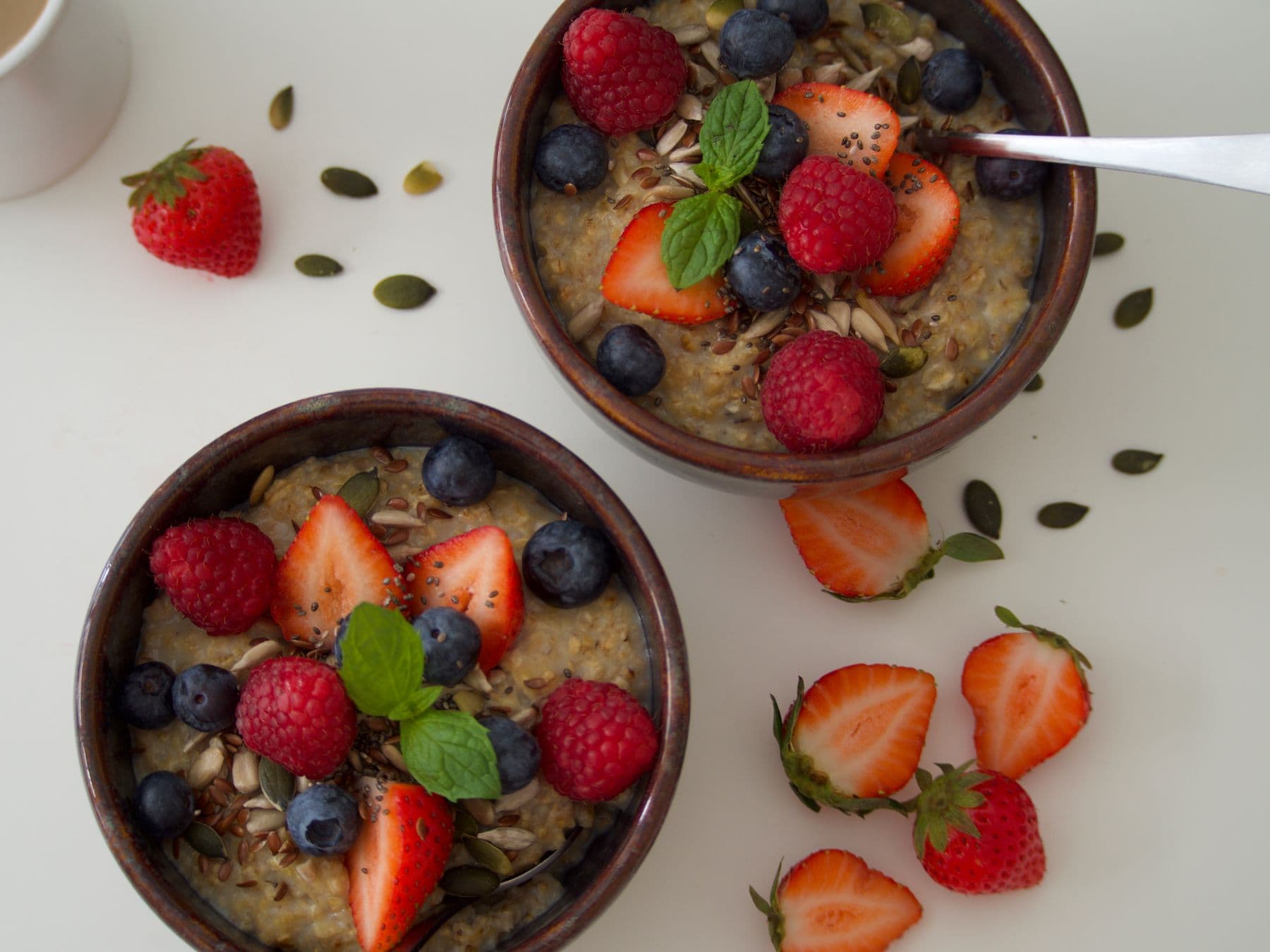
For breakfast, try oats with fruit, or add fruit alongside your usual eggs and toast. For lunch, fold beans into a soup, use a whole-grain bread you enjoy, or include vegetables alongside a sandwich. At dinner, lentils can join a sauce or stew, while a potato with its edible skin can be part of a meal.
These are menu ideas, not a requirement to include every option at once. Pick something affordable, available, and compatible with your allergies and dietary needs. Frozen vegetables and canned beans can be practical ingredients; a meal does not need to start with a farmers' market trip.
When comparing packaged foods, look at the fiber amount per serving and check the serving size. Then consider how much you actually eat. Comparing a tiny serving of one cereal with a large serving of another can give a misleading impression. The front of the package is an advertisement; the nutrition panel is where to make the comparison.
A sample day, without a rigid menu
Here is one way fiber-containing foods could appear throughout a day: oatmeal with berries at breakfast; a bean-and-vegetable soup with whole-grain toast at lunch; a pear as a snack; and rice, lentils, and roasted vegetables at dinner. Include other foods as needed to make meals satisfying and nutritionally appropriate for you.
This is an illustration, not a calculated meal plan or a promise of a particular fiber total. Portions, ingredients, and brands change the numbers. If you currently eat little fiber, introduce parts of the example over time rather than copying the whole day immediately.
You can translate the structure into your own food traditions. A familiar bean dish, a vegetable-filled stew, or the whole grains you already like may be a better fit than an unfamiliar recipe. The useful pattern is giving plant foods a regular place in meals.
Gut-health claims need a closer look
Fiber is often advertised as if every additional gram produces the same benefit. Research is more specific. In a 2022 NIH summary of a small Stanford study, researchers tested different purified fibers in 18 adults. Responses varied with fiber type and the individual.
That study helps illustrate uncertainty; it does not establish a universal supplement routine. A short trial using isolated ingredients is not the same question as what happens when someone adds beans or vegetables to their usual meals. Claims to “reset” a microbiome deserve more explanation than a slogan provides.
If you are considering a fiber supplement, ask your clinician or pharmacist whether it fits your situation and how it should be taken with your medicines. This is especially relevant during pregnancy, with an existing digestive condition, or when other treatment is underway. More is not automatically a better plan.
When to stop experimenting and get help
Persistent constipation should not be treated as a failure to eat enough vegetables. NIDDK's 2018 symptom guidance lists multiple possible causes and advises medical attention when symptoms do not resolve with self-care. Constipation accompanied by blood in the stool, constant abdominal pain, vomiting, inability to pass gas, or unexplained weight loss needs prompt medical assessment.
For an everyday starting point, choose one addition you would happily eat again tomorrow. Keep it manageable, notice how you feel, and build from there. A useful change is one that becomes part of lunch, not another project you have to maintain.