
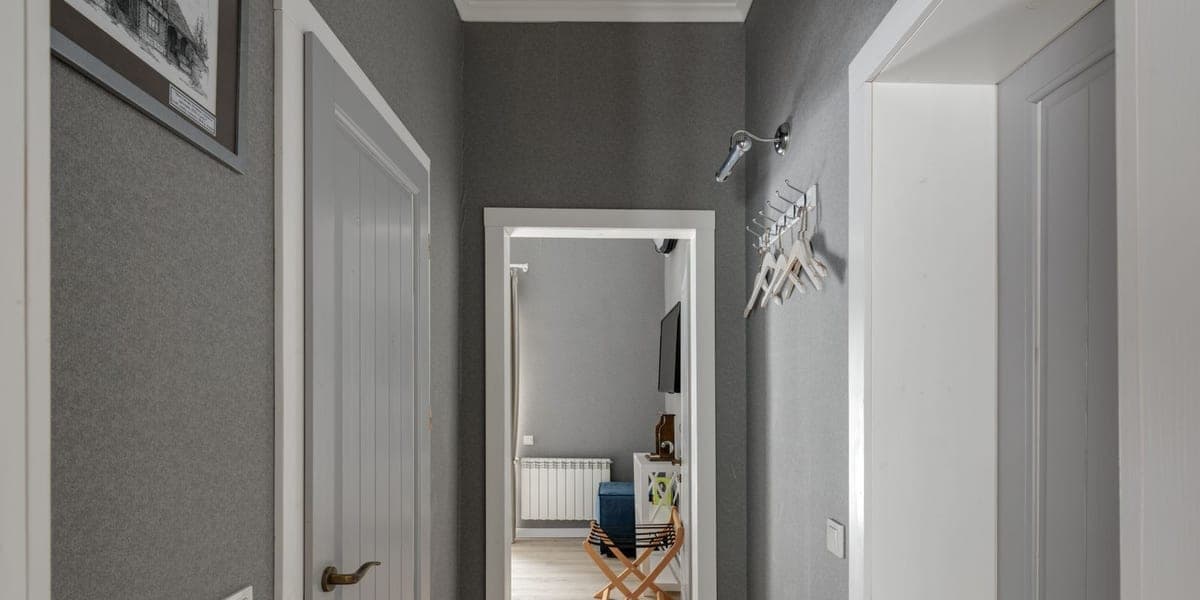
The route from bed to bathroom may be so familiar that you barely notice it in daylight. At night, a lamp that is awkward to reach or an object left on the floor can make the same journey more difficult. Looking at the routes you actually use is a practical starting point for a safer home.
A home review does not need to begin with a renovation or a shopping list of equipment. Start by identifying specific obstacles, deciding who can help and turning observations into manageable actions. If you are helping someone else, include them in the decisions from the beginning.
Begin with one ordinary journey
Choose a route you use frequently, such as the bedroom to the bathroom, the kitchen to a dining chair or the front door to the living room. Review it when there is good light and you have any assistance you need.
Do not deliberately walk in darkness or without your usual mobility aid to test the situation. The point is to notice difficulties, not recreate a risky moment.
Ask where you have to pause, squeeze past furniture or put something down. Think about how the route changes when you carry a cup, wear outdoor clothing or return home with shopping.
Write down the location and the problem in plain language. “Cannot reach bedside light from bed” is more useful than “bedroom unsafe.” A precise note makes it easier to identify the right solution and explain it to someone who can help.
Look at lighting and clear space
The CDC's 2025 guidance for older adults recommends removing trip hazards, keeping floors clear and improving home lighting. It also recommends bathroom grab bars and handrails on both sides of staircases.
Think about where everyday objects accumulate. Shoes by the entrance, charging cables near a chair or parcels waiting to be opened may repeatedly return to the same place.
Give those objects a home outside the walking route. The new location should be convenient enough that people actually use it. A storage system that requires a long detour may soon be abandoned.
For lighting, consider access to the switch as well as the light itself. A bright lamp is less helpful if you must cross a dark room to turn it on. Get appropriate help with electrical work and follow fixture instructions when changing bulbs.
Use a checklist to find overlooked details
The CDC's Check for Safety home checklist, checked in September 2026, prompts readers to examine floors, stairs, bathrooms, bedrooms and kitchens.
It suggests making frequently used kitchen items accessible, keeping stairs clear, repairing loose steps or rails and placing a reachable light by the bed. For the route to the bathroom, it suggests a nightlight. It also addresses loose rugs, cables and slippery bathing surfaces.
Use the checklist as a way to ask better questions rather than assuming one product solves every problem. A particular mat, rail or furniture arrangement must suit the person and space.
If you rent, record the repair needed and contact the landlord or property manager through the usual process. Keep a copy of the request and agree on a follow-up date. For changes involving fixtures or structural work, clarify what approval and professional installation are needed.
Separate simple tasks from work that needs help
Some actions may be straightforward, such as moving a lightweight item to an agreed storage place. Others involve lifting, reaching, drilling or assessing the strength of a wall.
Do not create a new hazard while trying to remove an old one. Ask someone suitable to move heavy furniture or handle work above shoulder height. A household chair is not a substitute for appropriate access equipment.
For support equipment, ask a clinician or occupational therapist about assessment and fitting. The right location and secure installation matter. Do not assume that a towel rail or an improvised handle is designed to support body weight.
Write each task with an owner and a next step. “Ask about bathroom assessment on Tuesday” is actionable. “Sort the bathroom eventually” leaves the most important details unresolved.
If a job cannot be completed promptly, ask a professional about an appropriate temporary arrangement. Avoid improvising a solution that has not been checked for the person's needs.
Keep the person at the center
When you are helping a parent, partner or friend, begin with what they find difficult and what they want to keep doing. A safer route should support their daily life.
Do not remove furniture or belongings without discussing the change. An object may serve a purpose that is not obvious to a visitor, and a sudden unfamiliar layout can be disorienting.
Work through one area together, then explain exactly what has moved. If the person uses a cane, walker or other aid, make sure the arrangement is assessed with that equipment in mind.
Ask whether the change feels usable after a few ordinary days. A clear floor is not the whole answer if a necessary item has become impossible to reach. Review the result, not just whether the task was marked complete.
Bring unsteadiness into the health conversation
Home changes are one part of fall prevention. The CDC advises telling your clinician if you have fallen, feel unsteady or worry about falling. It also recommends reviewing medicines that may cause dizziness or sleepiness.
Do not stop a prescribed medicine yourself. Describe what you experience and ask for a review. Bring information about recent falls or near falls, including where you were and what you were doing.
Ask whether a broader assessment, physical therapy or occupational therapy would be useful. You can bring your home notes to make the conversation concrete.
If a fall causes injury or you cannot get up safely, seek help rather than trying to force yourself upright. A home checklist is not a replacement for medical assessment after a concerning event.
Finish with a short follow-up list
Choose the most important unresolved items and arrange help. Keep the list small enough that you can see what is happening: the repair requested, the appointment booked and the person responsible for each next step.
Check the routes again when circumstances change, such as after illness, a move or the arrival of new equipment. A setup that worked previously may need adjustment.
The aim is not to certify a home as permanently free of risk. It is to make familiar tasks easier to navigate, address specific hazards and know where to get help when the space or your needs change.
Photo: Max Vakhtbovych on Pexels.