
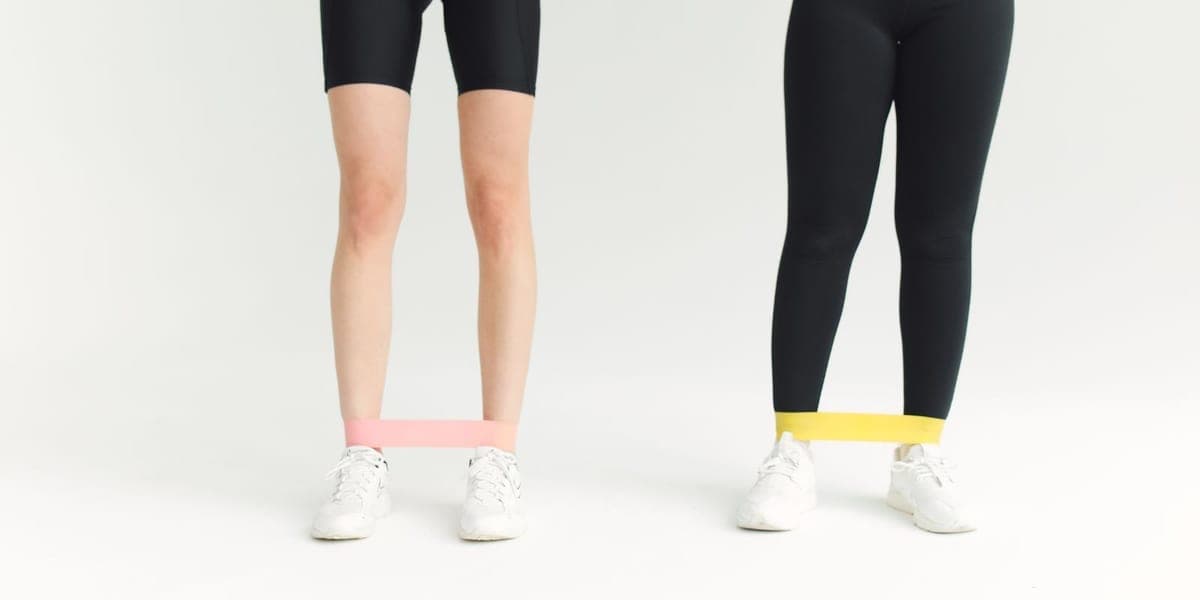
Resistance bands can fit in a drawer, but using them well takes more thought than finding somewhere to store them. The band, the movement and the way you secure it all belong to the same exercise. Buying the strongest option does not answer any of those questions.
A useful starting point is a small set of movements you have learned properly, with equipment that matches the instructions. This guide is about making those choices and checking the setup. It is not a replacement for an individual rehabilitation programme or a demonstration of exercise technique.
Decide what you want the band to do
The NHS strength and flexibility guidance, reviewed in 2026, includes resistance bands among muscle-strengthening activities. It recommends strengthening the major muscle groups on at least two days a week and building up gradually.
A band is one way to provide resistance. It is not a complete programme simply because a package contains several colors. Before buying, decide whether you are following a beginner class, working with a trainer or using a physiotherapist's prescribed exercises.
Write down the equipment that programme requires. A short loop, a long flat band and tubing with handles are different formats. Ask the instructor to identify the intended one rather than assuming anything stretchy will work.
If you have an injury, an existing condition, pregnancy-related exercise questions or treatment that affects activity, check the plan with your clinician. Tell them which exercises you want to do and what equipment you have. A specific question is easier to answer than whether bands are generally safe.
Read the product information before the color
Band colors can help organize a set, but do not assume they mean the same thing across brands. Manufacturer Meglio explains in its 2026 guide to band colors that color systems are not standardized.
Check the chart for the actual product. Keep the instructions, including any limits on stretching and directions for compatible accessories. If the seller cannot provide clear use information, consider an option with better documentation.
Material matters too. Torbay and South Devon NHS Foundation Trust's therapy band guide, checked in October 2026, notes that both latex and non-latex bands are available. If you have a latex allergy, verify the material rather than inferring it from the appearance.
You do not have to buy a large bundle immediately. Once you know the format and resistance your instructor recommends, you can choose the equipment that serves that plan. Extra attachments are only useful when you know what they are for.
Inspect the band every time
In its 2024 safety advice for resistance bands and tubing, Aneurin Bevan University Health Board advises checking for nicks, tears and punctures before use. Damaged equipment should be replaced.
The same guidance warns about rebound injuries, particularly near the face and eyes. It advises against overstretching, calls for secure attachment to a sturdy object when anchoring is needed, and recommends storage away from direct sunlight and extreme temperatures.
Make inspection part of getting ready, like clearing the space where you will stand. A band that has sat unused in a cupboard still deserves a check. If you find damage, set it aside so it does not accidentally return to the next session.
Keep sharp objects away, and store the equipment where children will not treat it as a toy. These are simple habits, but they belong to every session, not just the first one after opening the package.
Treat the anchor as part of the exercise
A video may show an attachment just outside the camera frame. That missing detail matters. Do not copy the movement until you understand how the setup works.
Ask your instructor to show the full arrangement: the attachment, the band position, where you stand and how you begin and finish. Follow the manufacturer's directions for any anchor. Do not improvise a substitute from a piece of furniture or a door handle just because it is nearby.
A helpful question is, “Can you watch me set this up from the beginning?” That lets the instructor assess the steps you will actually repeat at home, including how you get into position.
If your room cannot accommodate the instructed setup, ask for another movement or a different equipment option. You do not need to redesign the exercise yourself to make a purchase worthwhile.
Learn both directions of the movement
The Torbay guide describes stretching and relaxing a band with control, beginning at a manageable resistance and seeking a demonstration when technique is uncertain. It also advises changing to an easier resistance if the starting level feels too difficult.
During instruction, pay attention to the return as well as the effort. Ask where your hands and feet should be, how to hold the band and what should stay still. Ask how to finish without suddenly releasing tension.
Take brief notes in your own words after the demonstration. “Yellow band” is not much of a record if you later buy another brand. The product, exercise name and setup instructions are more useful.
If you cannot reproduce the movement confidently, pause and get clarification. Completing a planned number of repetitions is less useful than learning a version you can perform as instructed.
Progress one decision at a time
Keep a simple record of the exercises, band used and any questions that came up. You can use that record when an instructor reviews whether to change the resistance or another part of the programme.
Avoid treating every session as a test of how far a band will stretch. Follow the product limits and the progression you have been taught. A harder band is a change in equipment demands, not a reward you must earn on a particular date.
Sharp pain is a reason to stop and seek advice, not to force the next repetition. The Aneurin Bevan guidance also recommends consulting the physiotherapist about persistent pain. If an exercise is part of rehabilitation, keep adjustments connected to that clinician's plan.
The best home setup is one you understand well enough to repeat: the right equipment, an intact band, a secure arrangement and a movement you can control. Keep those decisions clear before making the exercise harder.
Photograph: Polina Tankilevitch on Pexels.