
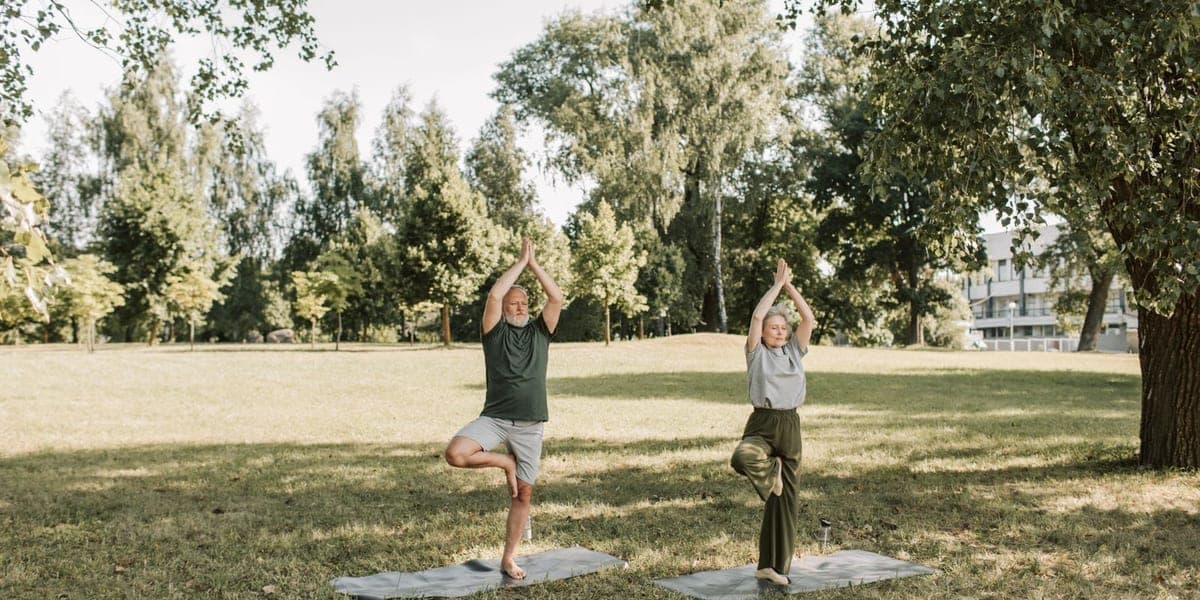
Balance often attracts attention only after a wobble: stepping off a curb, turning quickly, or reaching for something just out of range. It can also become an intimidating fitness topic, with videos showing people standing on unstable equipment or closing their eyes on one leg.
You do not need to begin with a challenge that makes you feel unsafe. A useful introduction is to understand where balance practice fits, choose an appropriate setting, and recognize when a professional assessment is the better first step.
Balance belongs alongside other movement
The CDC's guidance on physical activity for older adults, accessed in September 2026, identifies aerobic activity, muscle strengthening, and balance work as distinct parts of an active routine. Together, these activities help support physical function and reduce fall risk.
This means a walking routine and balance practice can serve different purposes. You do not have to abandon the activity you enjoy to make room for a new skill. If you already take regular walks, consider discussing how a small amount of supported balance work could fit alongside them.
The right starting point depends on your current ability. A person who feels steady but has never practiced balance deliberately is in a different situation from someone who has fallen recently or feels dizzy when standing. A general exercise page cannot make that distinction for you.
Decide whether you need guidance first
The CDC's fall-prevention advice, accessed in September 2026, recommends talking with a healthcare provider about falls and reviewing medicines that may contribute to dizziness or sleepiness. Vision and foot care, suitable footwear, and the home environment also matter.
If you have fallen, feel unsteady, or worry about falling, tell your clinician. A physical therapist can help select exercises and supports that fit your needs. Do not stop medicines on your own because you suspect they affect balance; bring the question to the prescriber or pharmacist.
An appointment is easier to use when you describe the actual situation. Did the problem happen while turning, getting out of bed, or walking on uneven ground? Were you lightheaded or did a foot catch on something? Write down what you remember without trying to assign yourself a diagnosis.
Set up before you start
The NHS balance-exercise guidance, reviewed in 2023, recommends comfortable clothing, gradual progression, and practicing near a wall or stable chair. Its examples are intended to be approachable, with support available.
Choose a clear area where you will not have to step around a bag, rug, pet, or trailing cable. Make sure the support you intend to use cannot slide away. Keep the instructions where you can read them before starting instead of trying to balance while scrolling through a phone.
Think through how you will finish as well as how you will begin. Can you easily return both feet to the floor? Is a seat nearby if you need to rest? If you cannot create a setup that feels secure, ask for help with the environment or use a supervised setting.
This is not about making your home look like a gym. It is about removing avoidable distractions so you can pay attention to the movement itself.
Explore one supported movement
One NHS example is a supported one-leg stand: face a wall with fingertips touching it, gently lift one foot, keep the hips level and the standing knee slightly bent, then return the foot to the floor. The page describes holds of five to ten seconds and three attempts per side.
Treat that as the source's example, not a requirement to push through instability. If this is not comfortable or safe for you, do not force it. Ask a physical therapist for an alternative. The NHS also describes controlled sideways steps and heel-to-toe walking, and suggests practicing its balance exercises at least twice weekly.
Read the full instructions before choosing a movement. A photograph of an advanced pose is not a personalized exercise prescription. Keep your eyes open and support available; making an exercise dramatically harder is not a necessary first step.
Make progress about control
It is tempting to judge practice by the longest hold or the fewest touches of the wall. For a beginner, it may be more useful to notice whether you understood the instructions, had an appropriate setup, and could start and finish deliberately.
Do not turn a wobbly attempt into a competition with yesterday. If you feel tired or distracted, choose another time. Stop if you develop dizziness, pain, or feel unsafe, and seek advice about symptoms rather than treating them as a training target.
If you are following a therapist's program, ask what progress should look like for you. Should you change repetitions, practice frequency, or the amount of support? Let the answer guide the next step. Avoid stacking several changes together simply because a social video calls them a progression.
Look beyond the exercise session
The CDC's Still Going Strong advice for older adults, accessed in September 2026, places movement within a broader plan for staying mobile and independent. Exercise is useful, but it does not make an obstacle-filled home or an unsuitable walking aid irrelevant.
Consider one everyday task you would like to feel more confident doing. Perhaps it is navigating a familiar route, moving around the kitchen, or attending a class. Share that goal with your therapist or instructor so the conversation stays connected to your life.
When comparing classes, ask about the instructor's experience, support options, and whether the session can accommodate your mobility needs. Find out how you will get there and whether the room is accessible. A suitable class you can attend comfortably is a better practical choice than one whose description sounds impressive but leaves those questions unanswered.
Keep a brief note of what you tried and what felt uncertain. That gives you a useful starting point for the next session, with safety and confidence at the center of the plan.
Photo: Vlada Karpovich on Pexels. The image illustrates balance activity, not the supported beginner exercise described here.