
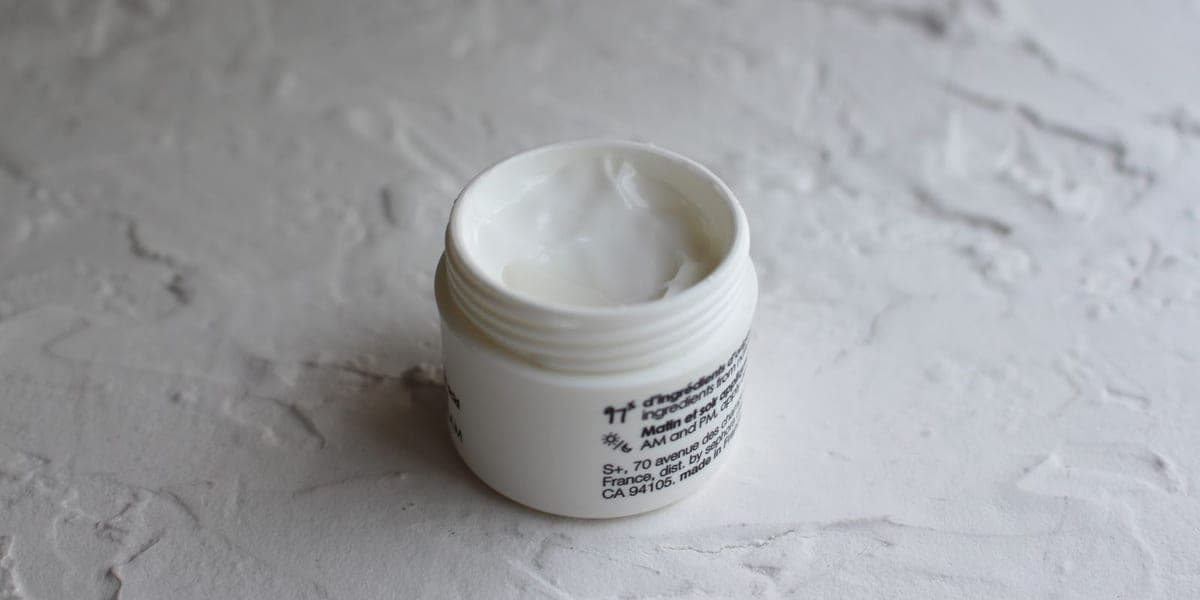
When skin feels tight or rough, the instinct is often to add another product. A serum promises hydration, a scrub promises smoothness, and a richer cream promises repair. Soon it becomes difficult to tell which product is helping and which step makes your skin sting.
A simpler starting point is to examine what happens around cleansing and moisturizing. Dryness can have several causes, and persistent symptoms deserve attention. But a crowded shelf is not a requirement for thoughtful skin care.
Start with what your skin is telling you
The American Academy of Dermatology's dry-skin overview, accessed in September 2026, describes dry skin as skin that has lost too much water. Low humidity and indoor heating can contribute, while medications or underlying conditions may also be involved.
That is a useful reason to avoid diagnosing every rough patch as a shopping problem. Notice where the dryness appears, when it started, and whether anything changed around that time. New cleanser? More frequent handwashing? A different work environment? A prescribed treatment? Those details can help you describe the issue clearly if you need advice.
You do not need to identify the cause yourself. The value of noticing a pattern is that it gives you something concrete to discuss. It also keeps you from changing five things at once and then having no idea which change mattered.
Make washing gentler
In its tips for relieving dry skin, accessed in September 2026, the American Academy of Dermatology recommends warm rather than hot water, showers or baths limited to five to ten minutes, and gentle cleansing. Patting dry avoids the rubbing that can irritate very dry skin.
Apply moisturizer while skin is still damp and again when it feels dry. For hands, keeping cream near the place where you wash can make that step easier to remember. The academy also recommends gloves for tasks involving water and protection from cold, dry conditions.
Think about your own setup before making a purchase. If your cream lives in a bedroom drawer but you wash your hands downstairs, its location may be the first thing to change. If the container is awkward to open, choose packaging you can use comfortably. These details are ordinary, but they determine whether a routine survives a busy day.
Understand the texture choices
Moisturizer is a broad category. The American Academy of Dermatology's guide to choosing one, accessed in September 2026, explains that lotions, creams, gels, and ointments differ in texture and composition. Creams and ointments generally provide more help for dry skin than lighter lotions.
That does not mean every part of your face or body needs the same product. Your hands may tolerate a heavier texture than you want on your face during the day. If your skin is both oily and dry in different places, discuss a suitable approach rather than assuming the richest option belongs everywhere.
When comparing products, write down what you need the product to do. Is it for hands after washing, a dry area on your body, or facial skin that reacts easily? Start there instead of comparing an expensive face cream with a large body lotion as if they were interchangeable purchases.
Price alone cannot answer whether you will like the texture, tolerate the formula, or remember to apply it. A smaller first purchase may be more sensible than buying several large containers before you know how a product feels.
Read labels without chasing every ingredient
The academy's dry-skin tips favor fragrance-free products. An unscented label is not necessarily the same thing: a product may include ingredients intended to mask an odor. If dryness is already accompanied by irritation, that distinction is worth knowing.
You also do not need to assemble a separate product for every ingredient mentioned online. A formula is a finished product, not simply a list of fashionable components. Compare the product's intended use and instructions, and keep a note of any ingredient or formula that has caused a reaction before.
For people with darker skin tones, the academy's guidance on dry-skin care, accessed in September 2026, notes that dryness can have a whitish or grayish appearance and discusses moisturizers containing ceramides to help retain moisture. That appearance is another reason to focus on comfort and dryness rather than trying to scrub the surface into a different look.
Keep changes easy to interpret
For your next shopping trip, consider taking a photo of the products you already own. Check whether you have an appropriate moisturizer before adding another. Make a short list of what you liked or disliked about the last one: greasy finish, difficult packaging, strong fragrance, or discomfort after application.
This is a practical experiment, not a medical treatment plan. If you use a prescribed skin medicine, ask its prescriber how to adjust your routine if dryness develops. Do not stop or modify a prescription solely because a general article suggests simplifying your shelf.
You might also take a photograph of the affected area for your own records, using similar lighting each time. The purpose is to help communicate changes, not to inspect every pore or demand overnight progress.
Know when to ask for help
The academy advises seeing a dermatologist when dryness continues or worsens despite appropriate self-care. Persistent itching, cracking, or burning with products can need assessment. Dryness linked to an underlying condition may require treatment for that condition rather than another moisturizer.
Bring your product list, the timing of symptoms, and any relevant medication changes. Mention whether symptoms interfere with sleep, work, or routine washing. You do not need to arrive with a perfect theory. Clear observations are enough to begin a more useful conversation.
Photo: Yulia Shapereva s on Pexels.