
Flakes on a dark top can send you straight to the shampoo aisle. The choices quickly become confusing: different ingredients, different promises and bottles that look almost interchangeable. A useful first step is to read what the product is meant to do and how it is meant to be used.
Scalp care also has to fit the hair growing from it. A routine that suits one person may be awkward or drying for another. You do not need the most elaborate collection of products; you need clear instructions and a sensible point at which to ask for help.
Start with what you are noticing
Write down whether the main issue is flaking, itching, discomfort or a change in the scalp's appearance. Notice when it started and whether you changed any products around that time. These are observations, not a diagnosis.
The American Academy of Dermatology's 2023 dandruff guidance, checked in September 2026, explains that dandruff can have several contributing factors. Mild cases may improve with regular washing; persistent cases may need a dandruff shampoo.
Avoid treating visible flakes as proof of poor hygiene or of one particular cause. A brief description of the problem will be more useful to a pharmacist or dermatologist than a conclusion based on an online photograph.
Compare the active ingredient and directions
The AAD lists several dandruff-shampoo ingredients, including ketoconazole, selenium sulfide and salicylic acid. Products differ, and availability varies by country. Ask a pharmacist which option is suitable rather than assuming a brand name describes every formula sold under it.
Read the directions before use. Some products need time on the scalp before rinsing, while others have different instructions. Follow the particular label, including frequency, precautions and when to seek advice, instead of borrowing the timing from another bottle.
Take a photograph of the label if the print becomes difficult to read in the shower. Keep the product's full name in your notes. This makes a later conversation clearer than saying you tried “the blue bottle” when several versions exist.
Make scalp application practical
Check that you understand where the product should go and how to rinse it. If your hair or hairstyle makes access to the scalp difficult, ask for guidance rather than simply using more.
The AAD advises taking hair texture into account and keeping dandruff shampoo focused on the scalp for curly or coily hair because it can dry the lengths. Your normal conditioning routine may still have a role. Ask how to combine the steps for your hair.
A simple timer can help with a label-specified contact time. Set it for the product you are using, not a time you remember from a different treatment. The purpose is accurate use, not leaving shampoo on longer in the hope of a stronger result.
Change one thing you can evaluate
If you buy several shampoos, a scalp scrub and an oil at once, it becomes difficult to describe which change helped or caused discomfort. Keep the initial plan understandable and record what you actually used.
That does not mean you must persist with a product that causes a reaction. Stop if the product causes significant irritation and seek advice. Follow the label's warnings and do not deliberately repeat an uncomfortable application to prove a theory.
If you need to change products, ask whether the new one contains a different active ingredient or simply a different fragrance and packaging. A pharmacist can help you interpret the label without requiring you to become an ingredient expert.
Allow the instructions to set expectations
Look for the product's advice on how long to try it and what to do if symptoms persist. If the directions are unclear, ask before beginning. There is no single trial schedule in this article that applies to every formulation.
Keep a short record of use and symptoms. You might note the date, product and whether itching or flaking changed. You do not need daily photographs unless they are useful for your own record or a clinician requests them.
Avoid promising yourself a permanently flake-free scalp by a particular event. If the problem is affecting your comfort or confidence, mention that when seeking help. The impact on your day is relevant even if someone else thinks the flakes look minor.
Know when it may be something else
The AAD's guide to dry and flaky scalp conditions, accessed in September 2026, explains that psoriasis and fungal scalp infections can resemble a dry or flaky scalp. Some conditions need prescription treatment, so escalating cosmetic products may miss the underlying issue.
Arrange an assessment for persistent or severe symptoms, painful or inflamed areas, sores or hair loss. Do not assume a new bald patch is ordinary dandruff. A clinician can examine the scalp and decide whether further testing or a different treatment is needed.
Bring the products or clear label photographs to the appointment. Include recent hair dyes, styling products and treatments, along with when the symptoms began. An accurate sequence is more useful than trying to identify the responsible ingredient yourself.
Ask how the plan fits your wider care
If you already use a prescribed scalp treatment, ask before adding another medicated product. Check with your clinician or pharmacist before starting a treatment protocol during pregnancy, with other medicines or with a relevant existing condition.
You can also ask about hair color, styling practices or practical washing limitations. Be specific about what your normal routine involves so the advice is realistic. A plan that assumes daily washing may need discussion if that does not suit your hair or circumstances.
Do not borrow another person's prescription treatment. Similar-looking symptoms do not establish that you need the same medicine, amount or duration.
Keep the useful information
Once you have a workable plan, keep the product name, directions and follow-up advice together. If the formulation changes or your symptoms return, you have a record to discuss rather than starting from memory.
Dandruff care is often more about suitable product use and reassessment than about adding extra steps. Begin with the label, make the routine practical for your hair and ask for professional help when the expected improvement does not happen.
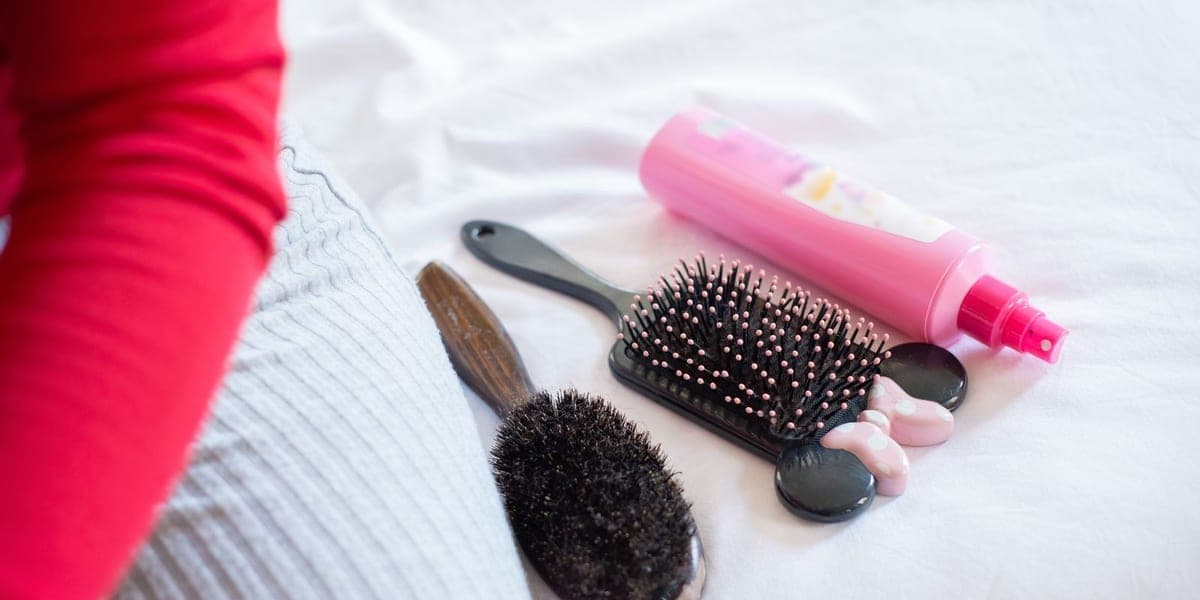
Photo: Pexels. Hair-care tools are illustrative, not dandruff treatments.